
01
The old LNB tested first
So we prove it has failed rather than assuming.
Home/DStv services/LNB replacement
LNB replacement
If your DStv has degraded gradually, lost channels one at a time, or started collapsing in light rain, the LNB is the first thing we will check. It is the part that fails most, and it costs the least to put right.
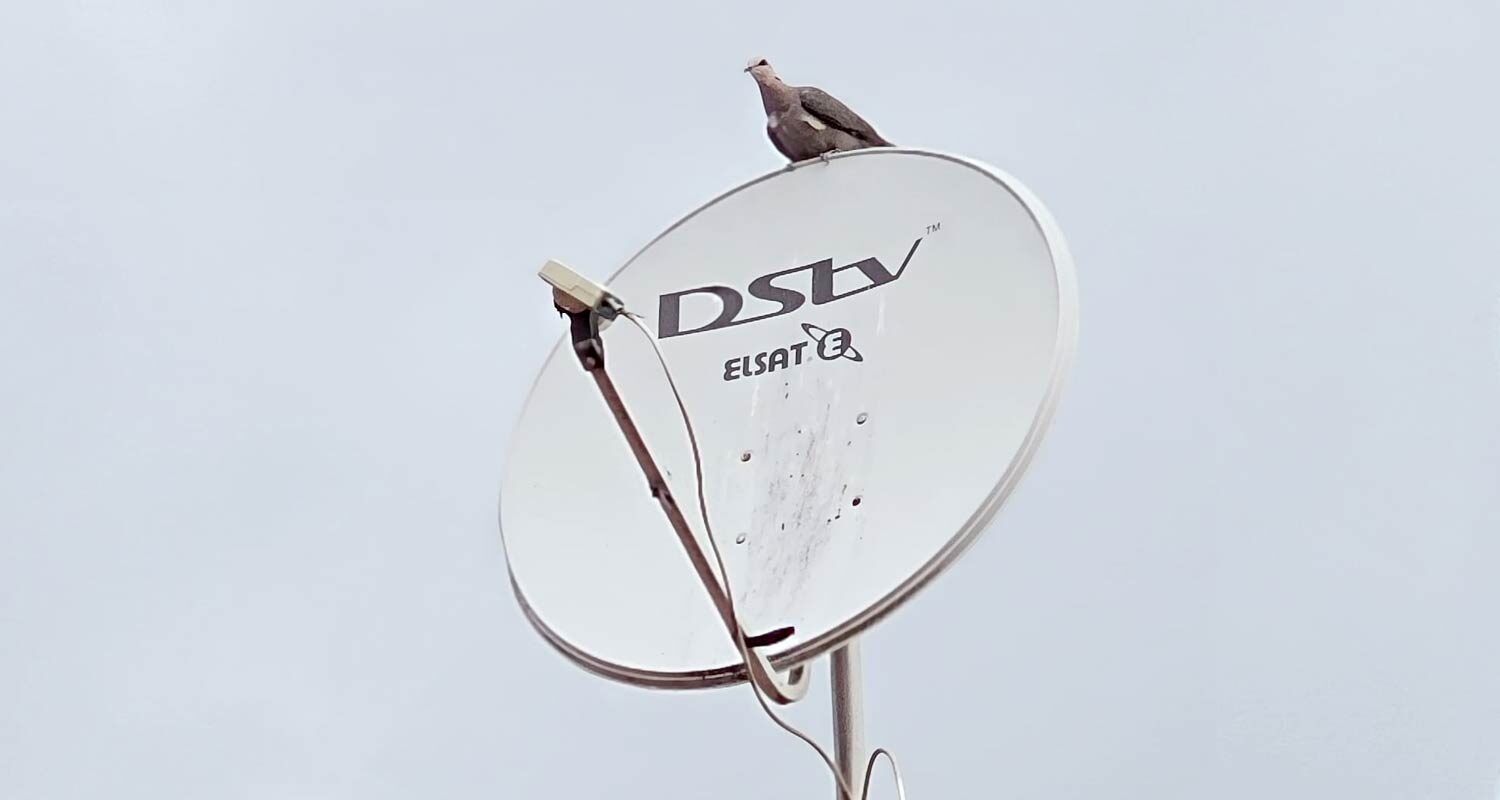
The LNB — Low Noise Block downconverter — is the small unit mounted on the arm at the front of your satellite dish. Its job is to catch the faint signal the dish reflects onto it, amplify it, convert it to a frequency the cable can carry, and send it down to your decoder.
It is an active electronic component. It contains an amplifier and an oscillator, and it needs power to run. And it sits outdoors, permanently, exposed to Highveld sun, summer hail, driving rain and the induced surges of a Gauteng thunderstorm. Nothing else in your DStv installation works that hard in those conditions.
So it degrades. Rarely all at once — usually gradually. The picture starts pixelating occasionally. Then it breaks up in rain that never used to bother it. Then a few weak channels disappear. Then more. People live with it for months, assuming DStv is just like that. It is not, and replacing the LNB restores it completely.
The detail
It rarely dies suddenly. It fades.
The weakest transponders drop out first while the strongest keep working. If you have gradually lost channels over months, this is very probably why.
The LNB has lost the margin it once had. Light rain that previously had no effect now pushes the signal below the threshold.
A degrading LNB produces an unstable signal. It works, then it does not, then it does.
A classic sign of a failing LNB. Thermal degradation means it works in the cool of the morning and fails in the afternoon sun.
Less common than gradual failure, but it happens — particularly after a lightning storm. The LNB is the most exposed electronic component in your installation.
Green or white deposits on the connector at the LNB. Water has been getting in. Usually the LNB has suffered and the connector needs replacing too.
What you get
Quick, cheap and thoroughly worthwhile.
01
So we prove it has failed rather than assuming.
02
Single, twin or quad, depending on your setup.
03
Because it has usually corroded too.
04
Fitting a new LNB is the ideal moment to optimise.
05
Both readings, both optimised.
06
Including the weak ones that failed first.
Included
Done properly, so it lasts.
LNB output measured before replacementTo confirm it is genuinely the fault
Correct LNB type fittedSingle, twin or quad, matched to your installation
Connector replacedIt has almost always corroded alongside the LNB
Proper weatherproofingSealed correctly, not wrapped in tape
Full dish realignmentStrength and quality both optimised
Complete channel testEvery channel, including the weakest
Our process
01
Gradually? In rain? Losing channels? It all points at the LNB.
02
To prove it before we replace it.
03
Along with a new, properly weatherproofed connector.
04
A new LNB is the perfect moment to optimise the dish.
FAQ
The things people actually ask us on the phone, answered straight.
WhatsApp us the make, the screen size and a short video of what the TV is doing. We can usually narrow the fault down before a technician is even dispatched.
WhatsApp 068 348 0078It is the small unit on the arm at the front of your satellite dish. It catches the reflected signal, amplifies it, converts the frequency and sends it down the cable to your decoder. It is an active electronic component that lives outdoors permanently, which is why it is the most common failure point in any DStv installation.
The classic signs are gradual degradation: channels disappearing one at a time, breaking up in rain that never used to bother it, intermittent pixelation on clear days, or signal that worsens as the day heats up. Sudden complete failure happens too, often after a lightning storm.
It is one of the cheapest DStv jobs there is. The LNB itself is not expensive, and the work — fitting it, replacing the connector, realigning the dish and testing — is typically under an hour. We quote a fixed price upfront.
On the Highveld, a good LNB with a properly weatherproofed connector can run for many years. What kills them early is lightning — and Gauteng, particularly the East Rand, takes a great deal of it. Poor weatherproofing shortens the life of any LNB dramatically.
Yes, always. Fitting a new LNB is the ideal moment to optimise the alignment with a signal meter, and it costs nothing extra. It is how you get the maximum margin against rain fade.
The number of decoders it can feed. A single LNB feeds one tuner, a twin feeds two, a quad feeds four. If you have Extra View, or an Explora with two tuners, you need at least a twin. We will fit the correct type for your setup.
Book a TV technician
That is the LNB, almost certainly. It is the most common DStv fault and one of the cheapest to put right.
LNB replacement and dish realignment across Gauteng
Contact